
British weather rarely stops a journey outright. What it does is make every part of it harder, and the difference between a well-run operator and a poor one shows up almost entirely on those days.
Here's what happens behind the scenes when the forecast turns, and what's worth asking before you need to know.
The decisions start the night before
By the evening before a journey, an operator running vehicles the next morning already knows what's coming. Weather warnings get checked, routes get reviewed, and the marginal journeys are picked out: the rural pickup on a road that never sees a gritter, the early start before the treated routes have been done, the venue approach up a hill that becomes impassable with any snow at all. Adjustments are made then, not at six in the morning. Departure times move. Routes shift onto gritted A-roads even where that adds miles. Occasionally a pickup point moves to somewhere a large vehicle can stop safely.
The instinct in bad weather is to leave earlier, and sometimes that's right. Often it isn't. Leaving before the roads have been treated puts a vehicle onto worse surfaces than waiting an hour would, and councils publish their gritting routes, so experienced operators plan around them. A slightly later departure on a treated road is frequently safer and quicker than an early start on an untreated one. If your operator suggests leaving later than you'd expected on a snowy morning, there's usually a reason worth hearing.
The clearest sign of a well-run operator is contact the evening before. A message saying "we're moving the pickup to 7:15 and taking the A-road" means someone has looked at the forecast and at your journey together. Silence until the morning usually means nobody did. For time-critical trips such as airport transfers, where a missed check-in can't be recovered, that evening call matters even more.
What snow, wind, flooding and fog actually do to a journey
Snow and ice are the obvious ones. Main routes are usually manageable once they've been treated, because motorways and major A-roads get priority. The real risk is the first and last mile: residential streets, school car parks and venue approaches that are never gritted at all. That's why a pickup point on a main road, even a less convenient one, can be the difference between a journey running and not running.
High winds are the underrated one. Tall vehicles catch far more wind than cars do, and a high-sided coach on an exposed stretch of motorway is affected long before a family car notices anything. Bridges and elevated sections bring restrictions and sometimes closures for high-sided vehicles, which can force a long diversion. The Severn crossings and the exposed sections of the M6 are regular pinch points for anyone travelling out of the Midlands.
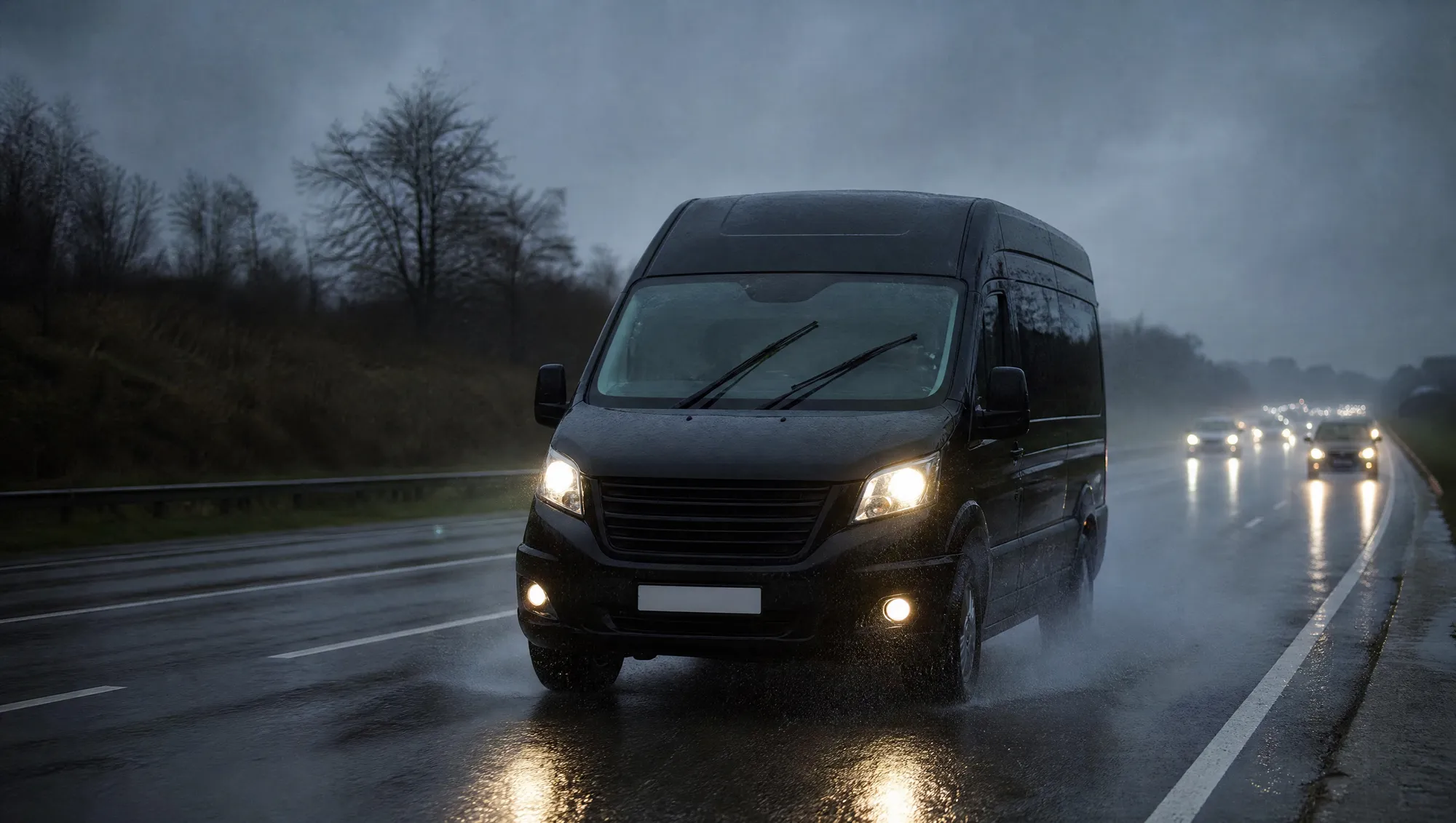
Flooding is the unpredictable one. Standing water is a common cause of real route failure in the UK, and it appears with very little warning after heavy rain, often on exactly the low country lanes that lead to rural venues. A driver won't take a loaded vehicle through water of unknown depth, and you wouldn't want them to. Fog, by contrast, rarely stops anything. It just slows everything down, so journeys take longer and schedules need slack, especially on the return leg after dark.
What good communication looks like, and how organisers can help
On a bad weather day you should expect contact before the journey if anything has changed, a driver you can reach while they're on the road, and honesty about delays as they happen rather than afterwards. What you shouldn't expect is a promise that everything will run exactly to plan. An operator guaranteeing normal timings in heavy snow is either not paying attention or not telling you the truth.
Organisers can make the day a lot easier. Be reachable early, because if plans change at five in the morning someone needs to answer the phone. Have a quick way of reaching your whole group, since moving a departure by an hour is simple for the operator and hard for forty people who may already have set off. Be open to a different pickup point on a main road. Think about the return leg as well as the outward one, because weather that's fine at 8am may not be at 6pm, particularly in winter when the light goes early. And read your cancellation terms before the day you need them, not during it. Businesses running regular staff transport through the winter should agree a bad weather plan with their operator in advance; it's part of how we set up corporate travel contracts.
Occasionally a journey shouldn't run at all. That decision belongs with the operator and the driver, who can see the conditions, and it should be made on safety alone. A good operator will tell you plainly and early and help you work out what to do next. It's an uncomfortable conversation, but the alternative is a vehicle carrying forty people onto a road it shouldn't be on.
AJ Travel plans around British weather all year for schools, care homes, businesses and community groups across Birmingham and the West Midlands, with DBS-checked, PCV-licensed drivers and a fleet from 8 to 70 seats. Ask us what happens if the weather turns when you book coach hire in Birmingham or a vehicle from our minibus hire Birmingham range. We'd much rather answer it then than on the morning itself.