
Most school trips are signed off by someone who wasn't in the room when the coach was booked. The head, the business manager or the educational visits coordinator gets a form, a risk assessment and a quote, and they want to know the transport is safe, legal and properly organised. If you're the teacher doing the booking, the easiest way to get that sign-off is to ask the right questions up front and have the answers in writing before you submit anything.
This is the checklist we'd want in your position, written from the other side of the booking. Nothing in it is complicated, but skipping any of it tends to come back at the worst possible moment, usually on the morning of the trip with thirty children waiting in the playground.
Start with the paperwork your school will ask for
The first thing to check is that the company is a properly licensed operator. Anyone carrying passengers for payment in a coach or minibus needs a public service vehicle operator licence, and a reputable company will give you its licence number without hesitation. Ask for it, write it on your paperwork, and ask for confirmation that the company holds insurance covering passengers. If a company is vague about either, that's your answer.
Drivers come next. Ask whether the drivers who work with school groups have been DBS checked, and whether the company can confirm that in writing for your records. All of our drivers are DBS checked, and it's a question we'd expect every school to ask. It's also worth asking how the company handles a driver being unwell on the day, because a firm with only one or two drivers has much less room to cover than one with a larger team.
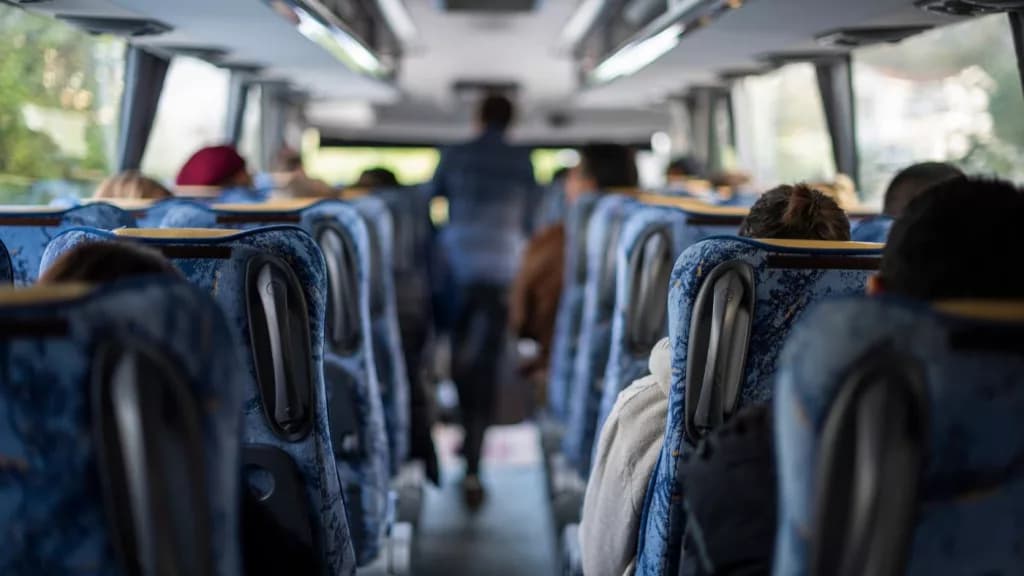
Then think about seat belts, because parents ask about them and your risk assessment should cover them. Insist on a vehicle with a seat belt fitted to every seat, then make it part of your own briefing that pupils put them on before the vehicle moves and keep them on. The driver can remind everyone, but staff sitting among the pupils are the ones who actually make it happen. Your school will probably also expect you to follow its own policy and the Department for Education's guidance on health and safety on educational visits, which is worth a skim if you haven't organised a trip before. Keep the operator's details, the booking confirmation and the pick-up plan together with the rest of your trip file so anyone covering for you can find them.
Choosing the right size of vehicle for your group
Work out your numbers the way the vehicle will see them, which means every person needs a seat. That includes teachers, teaching assistants, parent helpers and anyone travelling for pupils with additional needs. A class of 28 with four adults is 32 people, and that needs a vehicle with at least 32 seats, not a coach that "usually takes a class". If you're close to the limit of a vehicle, go up a size. Last-minute additions happen, and it's much better to have three empty seats than to leave a helper at school.
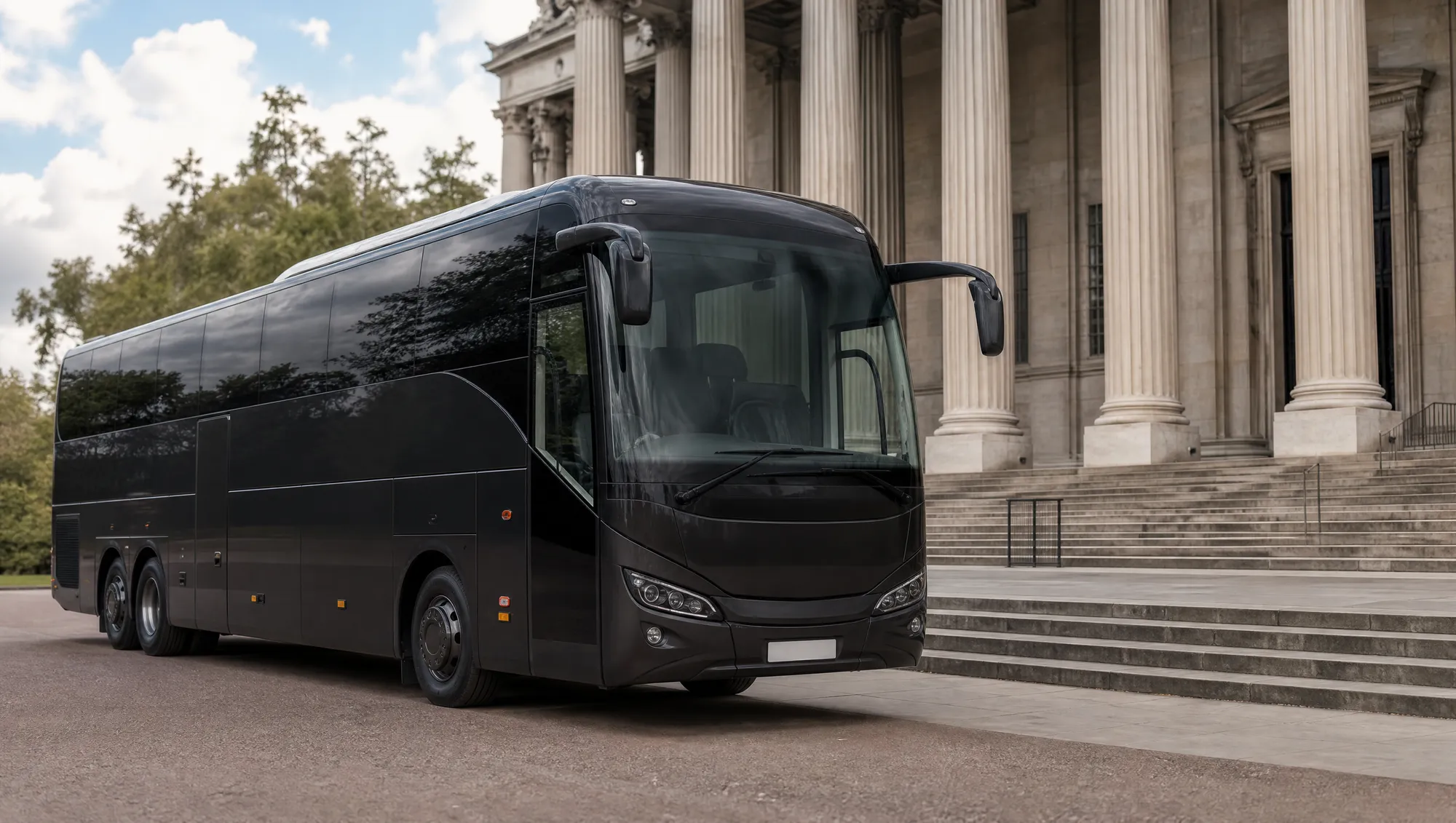
For a single class, our 33-seat coach is often the right fit. For a year group, a 49-seater or 70-seater coach keeps everyone together, which makes the headcount at each stop far easier. Smaller groups, like a sports team, a music ensemble or a small SEN group, usually travel better in a 16-seater minibus. They're easier to park at the venue and less daunting for children who find big coaches overwhelming.
Think about the venue as well as the numbers. Big attractions and museums have coach drop-off areas and are used to school groups. Farms, outdoor centres and smaller venues sometimes sit down narrow lanes where a full-size coach can't turn. If you're not sure, ring the venue and ask where coaches drop off, and pass that information on when you book. If you're doing a residential trip, mention luggage early too. A full coach has lockers underneath for suitcases, but a full minibus has very little space, and you don't want to discover that in the car park on the morning you leave.
Timings, the day itself, and what affects the price
Give the operator a clear plan with the pick-up time, the address and the exact entrance at school, the arrival time you need at the venue, and the time you'll be ready to leave. Be realistic about the end of the day. Getting thirty children through a gift shop, a toilet stop and a headcount takes longer than anyone plans for, so build in some slack. Our drivers allow a 15-minute grace period past the booked time, and after that additional waiting time is charged, so it's better to book a slightly later return than to cut it fine and pay for the difference.
For longer trips, remember that drivers work under legal limits on how long they can drive and how long they can be on duty. A day trip to the coast or a museum in London can be a long day for one driver once you add the waiting time, and the operator has to plan around that. Ask how they'll handle it. Sometimes the answer is a later start, sometimes a second driver, and it affects the price, so it's better to know before your budget is approved.
Book as early as you can, especially for the summer term, when every school in the area is trying to go out in the same few weeks. Once you've booked, keep an eye on the payment terms. We ask for a deposit to confirm a booking and payment in full before the trip, and schools often need time to raise a purchase order, so it helps to start that process as soon as the booking is confirmed rather than a week before you travel.
If you'd like a quote for a school trip, send us the date, your pick-up address, the destination, the number of pupils and adults, and the times you need through our quote form. We'll come back with the right vehicle for your group and everything your school needs to sign it off.