

How Group Travel Impacts Traffic Congestion in UK Cities
Traffic congestion remains a significant challenge in many UK cities, affecting daily commutes, air quality, and overall urban living. Group travel modes such as buses and trains have a crucial role in alleviating this issue. By offering an alternative to individual car journeys, these transport options reduce the volume of vehicles on the road. A recent report by the Urban Transport Group notes a rise in passenger numbers and service provision for buses across English city regions, alongside increasing ridership on rail networks. This growth demonstrates a gradual shift towards collective travel modes, which helps to mitigate congestion pressures especially during peak hours.
For instance, in Birmingham, while around 1.7 million people are theoretically within a 30-minute bus journey of the city centre, peak time congestion increases actual travel times, reducing this accessible population to roughly 0.9 million. This difference highlights both the challenges and the potential for improved group travel to unlock greater urban mobility and reduce road traffic.
Public Transport Accessibility and Urban Connectivity
Enhanced public transport accessibility has far-reaching effects on urban connectivity. When people can rely on frequent, convenient buses and trains, it broadens access to jobs, education, and services. This improved connectivity not only benefits individuals but also strengthens the fabric of the city by linking communities and fostering economic interaction.
Accessibility challenges, however, continue to constrain many urban areas. The Centre for Cities has identified that poor public transport accessibility reduces the gross value added (GVA) per worker, notably by an estimated £3,628 annually in Birmingham. Ensuring public transport networks serve wider populations at reliable speeds is essential for bridging this productivity gap and supporting vibrant city economies.
Economic Benefits Linked to Reduced Congestion
Reduced congestion supports economic productivity in multiple ways. Less time spent in traffic means workers arrive punctually and less stressed, boosting efficiency across sectors. Moreover, reliable group travel options allow employers to draw from a larger talent pool as commuting becomes feasible for more people.
Beyond individual firms, cities gain competitive advantages when their transport infrastructure improves. Reduced congestion also lessens the costs associated with freight and services, aiding smoother commercial operations. Research underscores that investment in public transport infrastructure not only enhances mobility but also spurs urban development and regeneration projects.
Strategies to Promote Group Travel and Reduce Vehicle Use
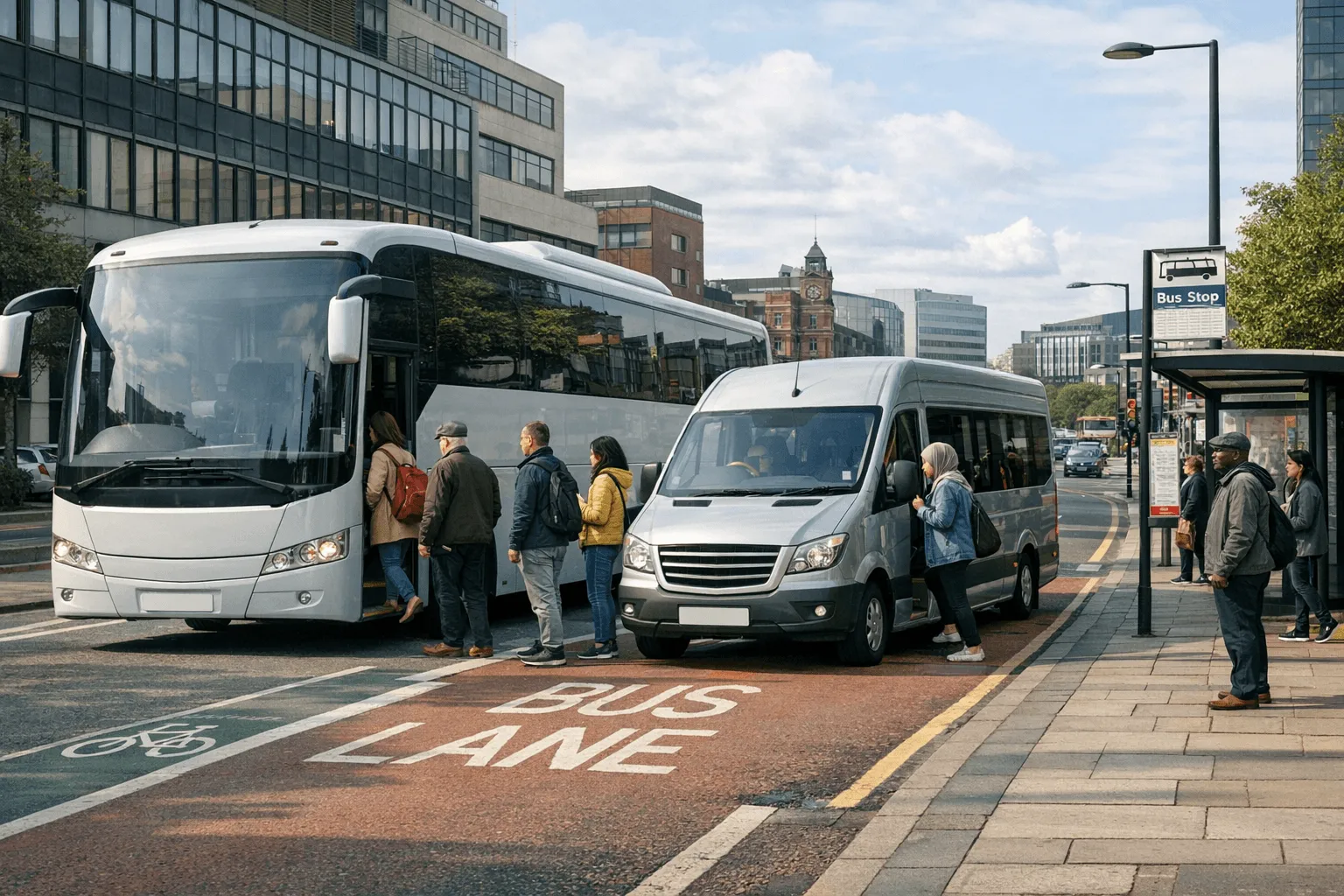
Practical measures to encourage group travel can have substantial impact. These include expanding bus and rail service frequencies, ensuring affordability, and improving infrastructure such as dedicated bus lanes to maintain punctuality. Additionally, integrating schedules across different transport modes creates seamless journeys, enticing more users to switch from private cars.
Education and awareness campaigns emphasising the environmental and economic benefits of group travel also play a role in shifting commuter behaviour. Employers and local authorities can collaborate to create incentives or provide workplace travel plans prioritising shared transport. Ultimately, sustainable urban mobility depends on offering a range of attractive, efficient options that meet diverse travel needs while discouraging unnecessary private vehicle use.
Need reliable group transport? minibus hire in Birmingham with AJ Executive Travel — available 24/7 across Birmingham and the West Midlands. Get a free quote today.