
If you've never booked group transport before, the words get used loosely. One company's "mini coach" is another's "large minibus", and a quote for a coach can arrive when you only asked about a van. It's worth sorting out what each one actually is, because picking the wrong size costs you either money or comfort, and sometimes both.
The short version is that it comes down to three things: how many seats you need, where the vehicle has to get to, and how long everyone will be sitting in it. Get those right and the choice usually makes itself.
What actually separates a minibus, a mini coach and a coach
A minibus is built on a large van chassis, the high-roof shape you'll recognise from school runs and airport transfers. In UK licensing terms a minibus carries up to 16 passengers, which is why 16 seats is such a common size, and why so many groups of 10 to 15 end up in one. Our 16-seater minibuses suit a lot of groups. They're easy to park, they fit down most residential streets, and they feel like a shared car rather than a bus, which people tend to like on a short trip.
A mini coach sits in the middle, and it's the size that confuses people most. There's no strict legal definition. In practice it means something from roughly 20 up to the mid-30s in seats, built more like a small coach than a van, with proper coach seating and more headroom. Our 20-seater sits at the bottom of that range, and our 33-seat mini coach is what most people have in mind when they talk about a mini coach. It's a good fit for a club, a wedding party or a company team that's too big for one minibus but nowhere near filling a full coach.
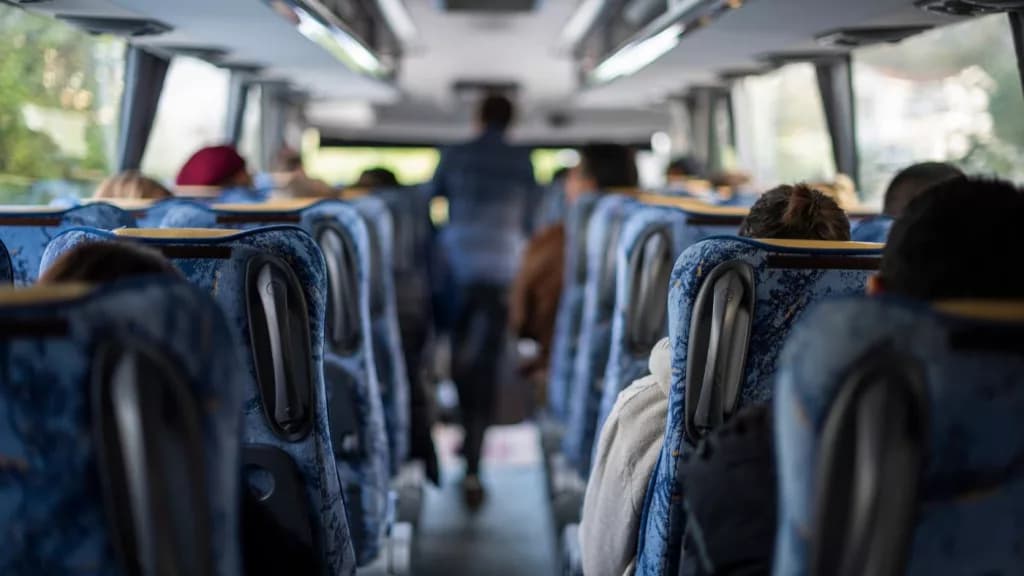
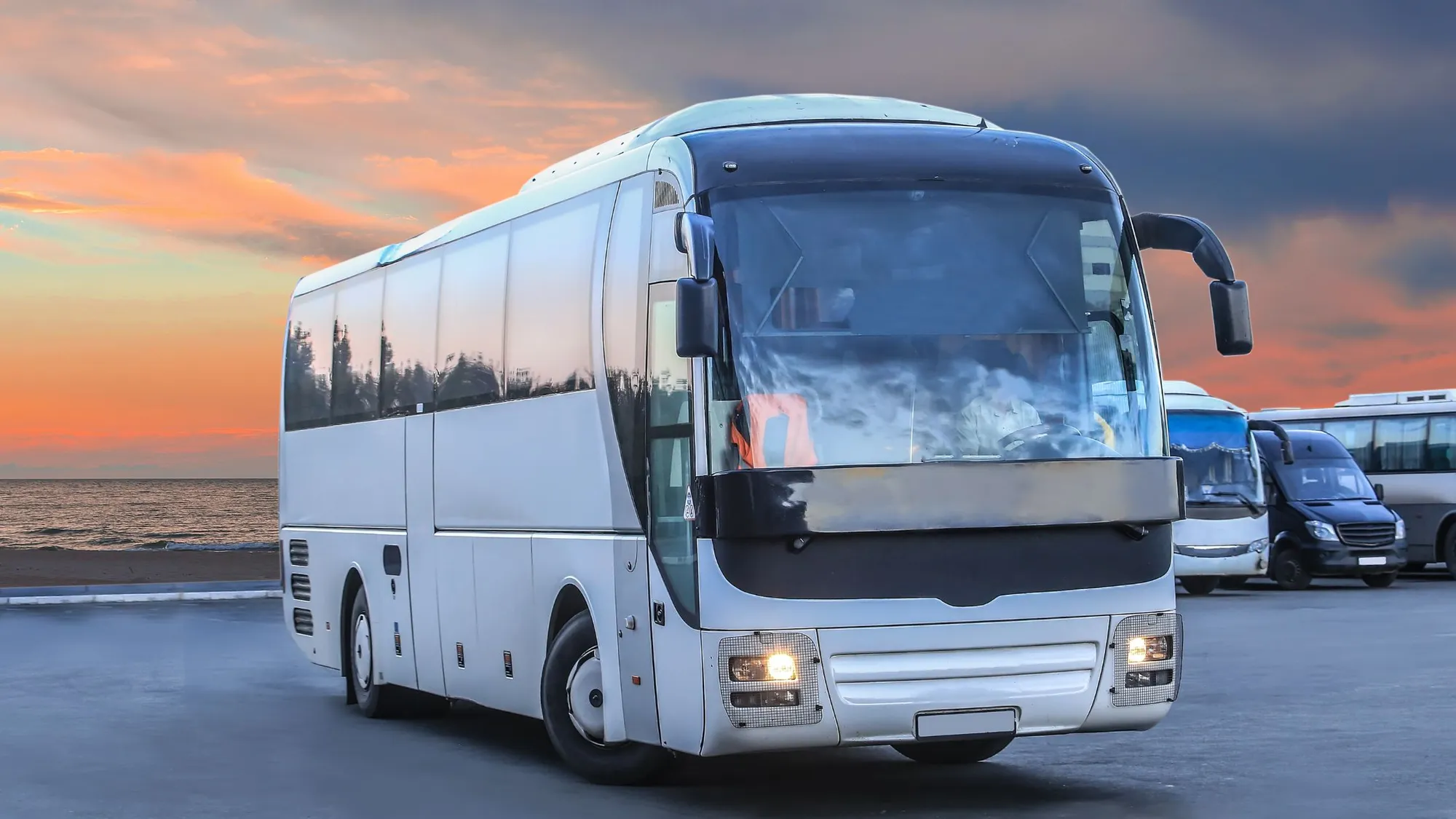
A full-size coach is what most people picture for a school trip or a long day out, with 49 or 70 seats, a high floor and big luggage lockers underneath. You notice the difference on a long journey. The ride is smoother, the seats are built for hours rather than minutes, and there's somewhere to put the bags that isn't the aisle. For large groups, our 49-seater and 70-seater coaches carry everyone together in one vehicle, which matters more than people expect when it comes to keeping a group on time.
Which one suits your trip
Start with the headcount, then be honest about it. Count the people who will actually travel, including staff, helpers and the organiser, and add a couple of seats spare. A group of 14 in a 16-seater is comfortable. A group of 16 in a 16-seater with suitcases is not, because every seat is taken and the bags have nowhere to go. If your numbers sit right on the edge of a vehicle's capacity, it's nearly always worth going up a size.
Then think about where you're going. Coaches are brilliant on motorways and at big venues with proper coach parking, but they don't fit everywhere. Country-house venues, narrow village lanes, some hotels and a lot of city-centre side streets are easier in a minibus or mini coach. If you're not sure whether a full-size coach can get to the door, ask the venue before you book. It's a two-minute phone call that saves a lot of walking with luggage.
Journey length matters too. For a 40-minute hop across Birmingham, a minibus is perfectly comfortable and often the most sensible option. For three hours up the M6, a coach or mini coach makes a real difference to how people feel when they arrive, particularly older passengers or anyone travelling back late. The same goes for luggage. A day trip with handbags and a coat is one thing, and a weekend away with suitcases is quite another. Full-size coaches have underfloor lockers, while a full minibus has far less space than people assume.
Cost per head, and when two smaller vehicles beat one big one
People often assume the smallest vehicle is the cheapest option, and for a small group it usually is. Once numbers climb, though, the maths changes. A full coach spreads the cost across a lot of seats, so the price per person can come out lower than running two or three minibuses for the same group. If you're sitting somewhere between 25 and 40 people, it's worth asking for prices on both a mini coach and a pair of minibuses and comparing them per head rather than on the total.
There are good reasons to choose two smaller vehicles, even when one large one would be cheaper. If your group is picking up from two different parts of the city, two minibuses can collect in parallel and save everyone an hour of driving around. If some people want to leave the event early and others want to stay, two vehicles let you run two return times. And if the destination has tight access, two minibuses will get somewhere a coach simply can't.
The other thing that moves the price is time rather than size. A vehicle booked for a long day costs more than a quick return trip, whatever its capacity, because the driver's working hours are part of what you're paying for. When you ask for a quote, give the pick-up times, the return time and any stops in between. That lets us suggest the right vehicle rather than just pricing the one you asked about.
If you'd like a hand choosing, send your numbers, dates and destination through our quote form and we'll tell you honestly which size makes sense. With minibuses from 16 seats and coaches up to 70, we can usually suggest more than one option and let you pick the one that suits your group and your budget.