
Understanding Carbon Footprints in Group Travel
The carbon footprint of group travel varies significantly depending on the mode of transport used. At its simplest, a carbon footprint estimates the total greenhouse gas emissions, primarily carbon dioxide (CO2), produced from an activity — in this case, travel. Different transport modes contribute differently to these emissions due to variations in fuel type, vehicle efficiency, passenger capacity, and overall distance travelled.
Factors influencing emissions include the type of fuel powering the vehicle—whether petrol, diesel, or electricity—as well as the number of passengers sharing the trip. For instance, a vehicle operating with a full load of passengers will generally emit less CO2 per person than the same vehicle with few passengers, spreading the emissions over a larger group. The distance covered also plays a key role as longer journeys naturally produce more emissions in total, though per-mile emissions can sometimes fall with longer trips due to efficiency gains during steady cruising.
Comparing Emissions of Minibuses, Cars, and Trains
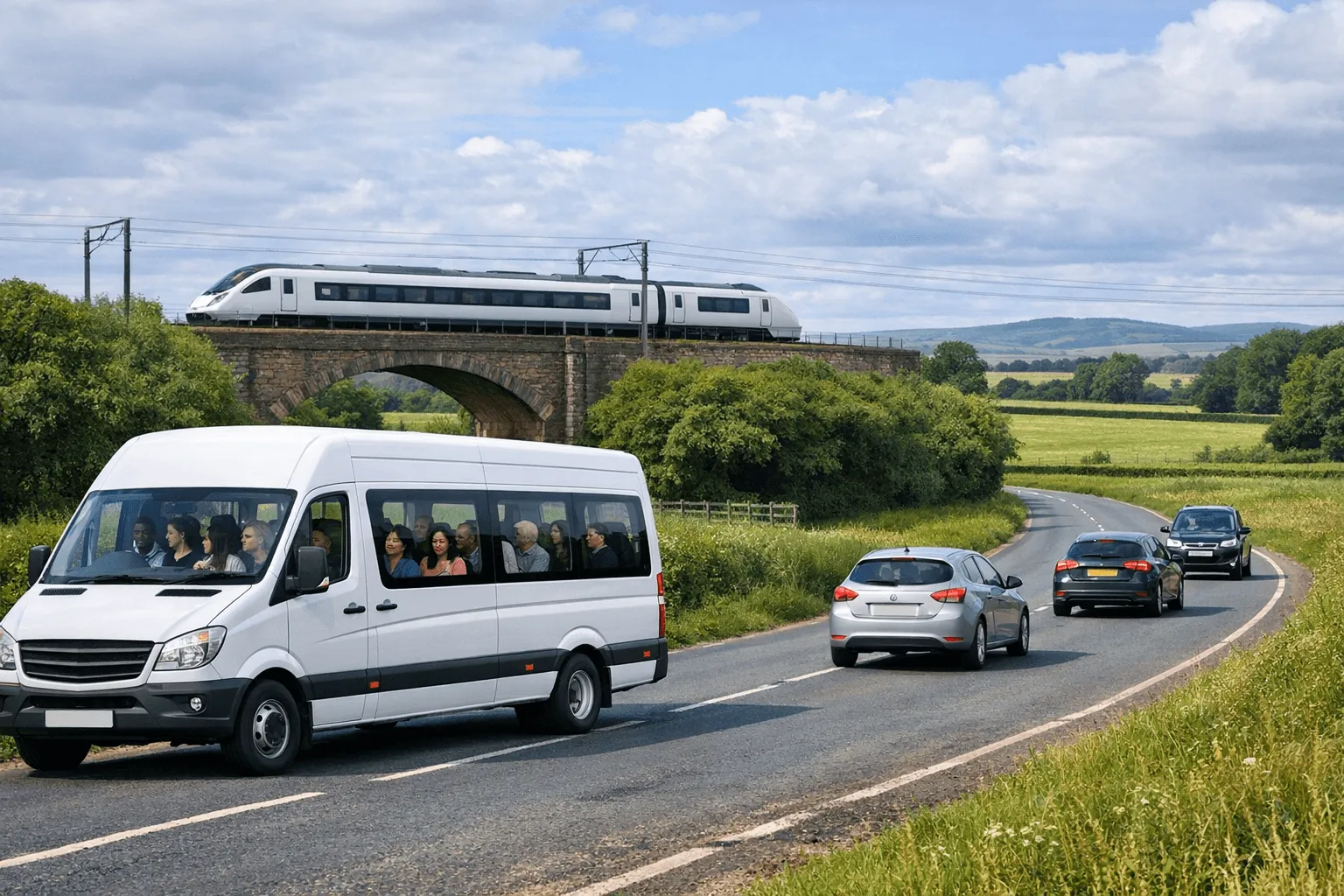
Carbon emissions differ markedly between minibuses, cars, and trains. Trains typically have the lowest emissions per passenger kilometre, especially when electricity is sourced from low-carbon grids. Standard UK trains produce considerably less CO2 per traveller compared to petrol or diesel cars, even electric cars, due to higher passenger capacity and efficiency.
For cars, emissions range depending on fuel type and occupancy. A petrol car with a single occupant might emit around 192 grams of CO2 equivalent per kilometre, which halves roughly with two passengers, and falls further with four. Diesel cars are slightly more efficient, while electric cars can emit as little as 53 grams per kilometre, largely influenced by how the electricity is generated.
Minibuses, often diesel-powered, produce emissions higher than trains but can be more efficient than multiple cars when carrying several passengers. Per person, a fully occupied minibus can reduce carbon footprint substantially compared to individual car travel. However, their advantage diminishes if largely empty or operating inefficient routes.
Practical Considerations for Choosing Group Travel
Passenger count is a crucial consideration when aiming to reduce environmental impact. A single minibus with ten passengers can result in far fewer emissions per person than ten separate cars making the same trip. Group travel also reduces congestion and overall fuel consumption.
Beyond emissions, factors such as convenience, total travel distance, and cost influence transport choice. For shorter journeys or regions not well-served by rail, minibuses may offer direct routes not feasible by train. Conversely, peak-time rail travel can be faster and less stressful for large groups. Considering overall travel time and logistical demands alongside carbon impact is essential for practical decision-making.
Strategies to Reduce Carbon Impact on Group Journeys
Choosing lower-emission options starts with careful planning of the travel mode according to group size and route. Opting for electric or hybrid vehicles when possible is beneficial, particularly where electricity comes from renewable sources. For longer trips, trains remain the most climate-friendly choice for groups, especially if booked in economy class where emissions per passenger are lower.
Combining travel modes, such as using a minibus for local transfers and trains for the longer part of a journey, can achieve both convenience and sustainability. Additionally, maximising vehicle occupancy and avoiding unnecessary detours helps reduce emissions per passenger. Organisations might also consider offsetting remaining emissions through recognised environmental projects.
By embracing these practical steps, groups can significantly lessen their environmental impact while meeting travel needs efficiently and comfortably.
Need reliable group transport? minibus hire in Birmingham with AJ Executive Travel — available 24/7 across Birmingham and the West Midlands. Get a free quote today.